
When a Fever Decides a Future: Why Child Health in Rural Africa Matters for Education
Updated: Dec 11, 2025

I still remember the first time I visited a remote health centre in the South of Cameroon.
The room was hot and crowded, the benches full of mothers holding sleepy children.
Outside, goats wandered past a broken fence. Inside, there were medicines missing from the
shelves.
One mother told me quietly:
“If my son’s fever doesn’t go down, I will have to choose between medicine or food.”
That sentence has never left me.
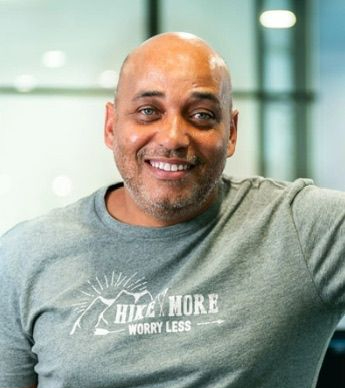
My name is Patrice. I was born in Libreville (Gabon) to a Cameroonian mother (from Ebolowa), and I grew up between stories of village life, city dreams and the reality that illness can change everything overnight.
In the past 12 years, I have worked in Digital Healthcare, Project Management and International Development, supporting projects in countries like Congo, Angola, Senega, Rwanda and Kenya. I spend a lot of my time looking at data, dashboards and systems.
But behind every statistic is a child like the ones supported by Children of Cameroon, a real boy or girl whose future can be reshaped by something as simple as a malaria test, a vaccine, or a donation to support someone education.
This blog is personal for me, because when I look at the kids on the Children of Cameroon’s website, I see cousins, neighbours, and the kid I used to be.

THE HIDDEN COST OF GETTING SICK WHEN YOU ARE POOR AND FAR FROM A CLINIC From the UK, it can be hard to imagine what healthcare challenges actually look like in a rural African community.
For many families in places like the North-West of Cameroon, rural Rwanda or Northern Congo, sickness is not just a health event, it is a financial and educational crisis at the same time.
Some of the barriers are brutally simple:
Distance:
In many rural areas, the nearest health facility is far away. In parts of Kenya, it can take up to
20 hours on foot for a pregnant woman to reach a health facility.
For children with fever, diarrhoea, pneumonia or injury, that journey is sometimes simply too
long.
Cost:
In Cameroon, only about 8% of people have any form of health coverage, and around 70% of
health spending comes directly from families’ pockets. When your income is irregular and very low, even a small bill for medicines can mean selling crops, skipping meals, or taking a child out of school to save on fees.
Multiple deprivations at once:
UNICEF estimates that almost half of children in Cameroon (0–17 years) experience four or
more serious deprivations, in food, health, housing, water and protection. In rural areas, more
than one in four children face severe deprivation, compared with just 3% in urban areas.
When so many basic needs are under pressure, health slips in and out of focus. You deal with the emergency in front of you.
For families living on the edge, a child getting sick is rarely “just” a health issue. It can mean missed
school, lost income, debt, and dreams quietly pushed further away.
WHAT I HAVE SEEN IN CAMEROON, CONGO, RWANDA AND KENYA
Over the last decade, my work has taken me into ministries, hospitals and community meetings in several African countries. I’ve helped design and roll out health information systems, supported community health initiatives and worked with partners trying to make sure every child counts in the data and in real life.
A few patterns keep repeating themselves:
1. RURAL DOESN’T MEAN HOPELESS, BUT IT DOES MEAN HARDER
In rural Rwanda, big investments in community health workers and primary care have helped bring child mortality down dramatically over the past 20 years.
But even there, research shows that almost half of school-aged children in some rural districts still have poor perceived health, signalling the need for stronger community and school-based health promotion.
In Kenya, around 72% of the population lives in rural areas, often with long distances to facilities and limited transport in time.
Families may know a child needs care, but the journey is dangerous, expensive, or simply impossible in time. Cameroon sits somewhere in between: enormous potential, strong people, but deep inequalities.
Urban children and wealthier families are much more likely to get timely, quality care than a child in a poor rural household.
2. EDUCATION AND HEALTHCARE ARE 2 SIDES OF THE SAME COIN
Children miss class because they are sick, because a younger sibling is sick, or because a parent is ill and they have to help at home or in the fields.
I have met:
Girls who could not sit exams because of untreated infections.
Boys whose school attendance collapsed after a preventable injury.
Teenagers who dropped out completely after a parent’s illness pushed the family into deeper poverty.
We often say, “education is the key to breaking the cycle of poverty”, and I believe that with all my heart. But that key only works if the child is healthy enough to walk to school, sit in the classroom, and concentrate.
That’s why organisations like Children of Cameroon, with their focus on sponsorship and education, are more connected to health than it might first appear. When a sponsor covers school fees, uniforms and textbooks, something powerful happens families get a little bit of breathing space.
Sometimes that breathing space is exactly what allows them to pay for a clinic visit or buy essential medicines before a minor problem becomes a life-threatening one.
WHY THIS WORK IS PERSONAL TO ME As a Cameroonian born in Gabon, now living in Europe and working in global health, I live in two worlds at the same time.
In one world, I join video calls, discuss data models and talk about “health system strengthening” and “universal health coverage”.
In the other world, when I travel back or talk to family and friends, I hear stories that are not
captured by our PowerPoints or BI tools:
A child whose education was delayed by years because of repeated malaria.
A mother who borrowed money at extremely high interest for a hospital bill.
A teenager who wanted to be a nurse but spent exam season looking after a sick relative instead of revising.
I am passionate about this because I know these children are not statistics.
They are smart, funny, stubborn, creative. They have dreams just as big as any child in London, Paris or New York.
When I see the profiles of children supported by Children of Cameroon, I recognise their faces, their villages, their hopes. I know what it means when a sponsor steps in and says, “I believe in your future.”
You are not just sending a child to school. You are giving a family one less impossible choice to make when illness comes.
WHERE DO WE GO FROM HERE? The big solutions, universal health coverage, better funding, stronger health systems, digital tools, are essential.
I will continue to work on those with governments and partners in Congo, Gabon, Cameroon,
Rwanda, Kenya and beyond.
But change also happens child by child, family by family.
When you sponsor a child or support Children of Cameroon’s work:
You reduce the pressure on families when a child gets sick.
You make it more likely that a child will stay in school even after a health shock.
You help build a generation of educated young people who can one day fix the system from the inside, as nurses, doctors, data analysts, community leaders and policymakers.
I often say that a sponsored child is not a passive recipient of charity.
They are a future decision-maker for their community.
Health and education are deeply linked. If we care about one, we must care about the other.

A SMALL INVITATION
If you are reading this from the UK or elsewhere and wondering, “Does my support really make a difference?”, my answer, from both my professional and personal experience, is YES.
It doesn’t solve every problem overnight. But it can be the reason a child finishes primary school, sits their exams, learns to read a medical chart, becomes a nurse, a doctor, a health worker… or simply a healthy, confident adult who can look back and say:
“When my family was struggling, someone believed in me.”
As someone who has walked through clinics in Cameroon, sat in meetings in Kigali, listened to community health workers in rural Kenya, and grown up in the reality of Central Africa,
I can tell you: those acts of belief matter.
They save time. They save schooling. Sometimes, they save lives.
And for a child deciding between a fever and a future, that is everything.


Comments